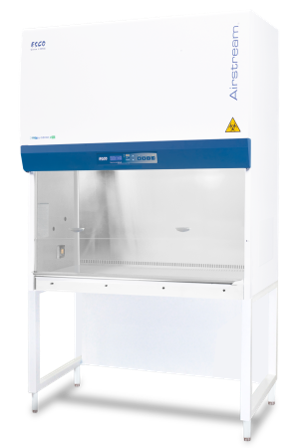
বায়োলজিক্যাল সেফটি ক্যাবিনেট (BSC), যা বায়োসেফটি ক্যাবিনেট নামেও পরিচিত, মূলত রোগজীবাণুযুক্ত জৈবিক নমুনা পরিচালনার জন্য অথবা যেসব প্রয়োগক্ষেত্রে জীবাণুমুক্ত কাজের অঞ্চল প্রয়োজন হয় সেখানে ব্যবহৃত হয়। বায়োলজিক্যাল সেফটি ক্যাবিনেট বাতাসের ইনফ্লো ও ডাউনফ্লো তৈরি করে যা অপারেটরকে সুরক্ষা প্রদান করে। ডাউনফ্লো বায়ু একটি ULPA/HEPA ফিল্টারের মধ্য দিয়ে প্রবাহিত হয় এবং ক্রস-দূষণের ঝুঁকি থেকে নমুনাকে রক্ষা করতে একটি ISO Class 3 কাজের অঞ্চল তৈরি করে। পরিবেশকে সুরক্ষা দিতে নির্গত বায়ুও বাইরে ছাড়ার আগে একটি ULPA/HEPA ফিল্টারের মধ্য দিয়ে যায়।
Esco বায়োসেফটি ক্যাবিনেটে কাজের ট্রে, সাইড প্যানেল নির্মাণ থেকে শুরু করে আনুষঙ্গিক যন্ত্রাংশ পর্যন্ত বিস্তৃত পরিসরের বিকল্প রয়েছে। Esco BSC-গুলো এরগনোমিক এবং শক্তি-সাশ্রয়ী বৈশিষ্ট্যসহ নকশা করা হয়েছে।
বায়োলজিক্যাল সেফটি ক্যাবিনেটের সর্বোত্তম কর্মক্ষমতা নিশ্চিত করতে এগুলো 2টি মানদণ্ড দ্বারা পরীক্ষিত ও শ্রেণিবদ্ধ: EN 12469:2000 এবং NSF 49।

EN 12469
EN 12469: 2000 বায়োটেকনোলজি - মাইক্রোবায়োলজিক্যাল সেফটি ক্যাবিনেটের কর্মক্ষমতার মানদণ্ড হলো মাইক্রোবায়োলজিক্যাল সেফটি ক্যাবিনেটের জন্য নতুন সমন্বিত ইউরোপীয় মান, যা CEN, ইউরোপীয় স্ট্যান্ডার্ডাইজেশন কমিটি দ্বারা প্রকাশিত। এই মানদণ্ড BSC-গুলোকে ক্লাস I, ক্লাস II এবং ক্লাস III-তে শ্রেণিবদ্ধ করে।

NSF
NSF International (পূর্বে The National Sanitation Foundation)-এর বায়োলজিক্যাল সেফটি ক্যাবিনেট্রি প্রোগ্রামটি 1970-এর দশকে নিয়ন্ত্রক সংস্থাসমূহের অনুরোধে শুরু হয়েছিল, যার মধ্যে ছিল Centers for Disease Control (CDC), National Institutes of Health (NIH) এবং National Cancer Institute (NCI)। এই মানদণ্ড বায়ু সঞ্চালনের ওপর ভিত্তি করে ক্লাস II বায়োসেফটি ক্যাবিনেটগুলোকে আরও উপ-প্রকারে শ্রেণিবদ্ধ করে: ক্লাস II টাইপ A1, ক্লাস II টাইপ A2, ক্লাস II টাইপ B1 এবং ক্লাস II টাইপ B2।
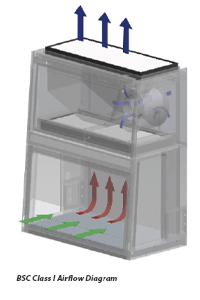
A Class I Biosafety cabinet protects the operator and the environment from exposure to biohazards. It does not prevent samples being handled in the cabinet from being exposed to contaminants that may be present in room air. Naturally, there is a possibility of cross-contamination that may affect experimental consistency. Consequently, the scope and application of Class I cabinets is limited, and it is largely considered obsolete.
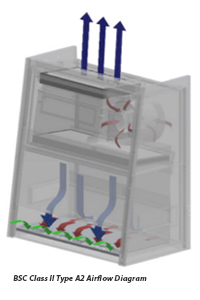
Class II Type A2
The Class II Type A2 biological safety cabinet is the most common Class II cabinet. It has a plenum from which 30% of air is exhausted, and 70% re-circulated to the work area as the downflow.
Stated from NSF/ ANSI 49:2010, both the Class II Type A1 and Type A2 must have the positively-pressurized contaminated plenum to be surrounded by negative pressure. In case there is a leakage on the positive plenum, the leaking aerosol will be pulled by the negative pressure back to the positive plenum, and it will not leak out.
In the A2 cabinet, about 70% of air from the positive plenum is recirculated as downflow, and the remaining 30% is discharged to the lab through the exhaust filter.
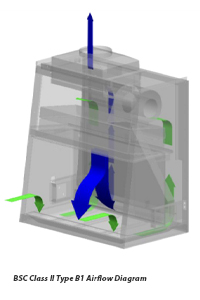
Class II Type B1
The Class II Type B1 biological safety cabinet has a common plenum from which 70% of air is exhausted, and 30% re-circulated to the work area as the downflow. This cabinet also has a dedicated exhaust feature that eliminates re-circulation when work is performed towards the back within the interior of the cabinet. Toxic chemicals employed as an adjunct to microbiological processes should only be allowed if they do not interfere with work when re-circulated in the downflow.
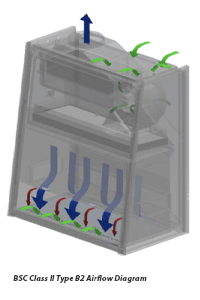
Class II Type B2
The Class II Type B2 biosafety cabinets are suitable for work with toxic chemicals employed as an adjunct to microbiological processes under all circumstances since no re-circulation occurs. In theory, Type B2 biological safety cabinets may be considered as the safest of all Class II BSCs since the total exhaust feature acts as a fail-safe in the event that the downflow and / or exhaust HEPA filtration systems cease to function normally. However, Class II Type B2 biosafety cabinets require large laboratory spaces due to their installation system and will require elaborate ducting works.
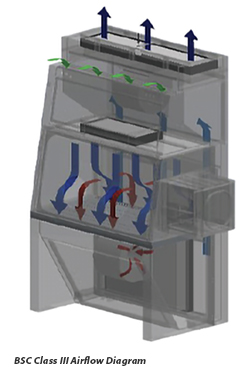
Class III Biological Safety Cabinets (BSCs) are designed for work involving microbiological agents assigned to Biosafety Levels 1, 2, 3, and 4, and are commonly specified for applications involving highly hazardous biological agents.
All work is performed through glove ports located at the front of the cabinet, ensuring complete physical separation between the operator and the work area. During normal operation, the cabinet maintains negative pressure relative to the surrounding environment. The cabinet is equipped with dual HEPA filtration on the exhaust system to provide an additional level of protection for personnel and the surrounding environment.
WHO ল্যাবরেটরি বায়োসেফটি ম্যানুয়াল 4র্থ সংস্করণ অনুযায়ী, একটি নির্দিষ্ট পরিস্থিতির প্রকৃত ঝুঁকি কেবল পরিচালিত এজেন্ট দ্বারা নয়, বরং সম্পাদিত প্রক্রিয়া এবং ল্যাবরেটরি কার্যক্রমে নিযুক্ত ল্যাবরেটরি কর্মীদের দক্ষতা দ্বারাও প্রভাবিত হয়।
ঝুঁকি গ্রুপ হলো এমন শ্রেণিবিন্যাস যা ল্যাবরেটরিতে সংক্রামক এজেন্ট বা টক্সিনের দ্বারা সৃষ্ট আপেক্ষিক বিপদ বর্ণনা করে।
বিশ্ব স্বাস্থ্য সংস্থা (WHO) ঝুঁকি গ্রুপগুলোকে এভাবে সংজ্ঞায়িত করে:
- WHO ঝুঁকি গ্রুপ 1- ব্যক্তিগত ও সম্প্রদায়গত ঝুঁকি নেই বা কম
- WHO ঝুঁকি গ্রুপ 2- মাঝারি ব্যক্তিগত ঝুঁকি, কম সম্প্রদায়গত ঝুঁকি
- WHO ঝুঁকি গ্রুপ 3- উচ্চ ব্যক্তিগত ঝুঁকি, কম সম্প্রদায়গত ঝুঁকি
- WHO ঝুঁকি গ্রুপ 4- উচ্চ ব্যক্তিগত ও সম্প্রদায়গত ঝুঁকি
বায়োসেফটি ক্যাবিনেট প্রতি বছর এবং/অথবা যখনই সেগুলো স্থানান্তর করা হয় তখন পুনরায় সার্টিফাই করা হয়।
WHO ল্যাবরেটরি বায়োসেফটি ম্যানুয়াল, 3য় সংস্করণ অনুযায়ী, অধিকাংশ BSC দিনে 24 ঘণ্টা চালানোর উপযোগী করে তৈরি করা হয়। দেখা গেছে যে অবিরাম পরিচালনা ল্যাবরেটরিতে ধুলা এবং কণার মাত্রা নিয়ন্ত্রণে সাহায্য করে।
সঠিকভাবে সংরক্ষণ করা হলে HEPA বা ULPA ফিল্টারের আনুমানিক শেলফ লাইফ 10 বছর পর্যন্ত।
ফিল্টারগুলো তাদের মূল প্যাকেজিংয়ে রাখা উচিত এবং স্যাঁতসেঁতে অবস্থা, অতিরিক্ত তাপ, ঠান্ডা বা দ্রুত পরিবর্তনশীল তাপমাত্রার সংস্পর্শে আনা উচিত নয়। এই ফিল্টারগুলো 95% পর্যন্ত আর্দ্রতা সহ্য করতে পারে; এর চেয়ে বেশি হলে ফিল্টার মিডিয়া আটকে গিয়ে বিকল হতে পারে।