UV Box vs. PCR Cabinet: Why HEPA Filtration Matters for PCR Preparation
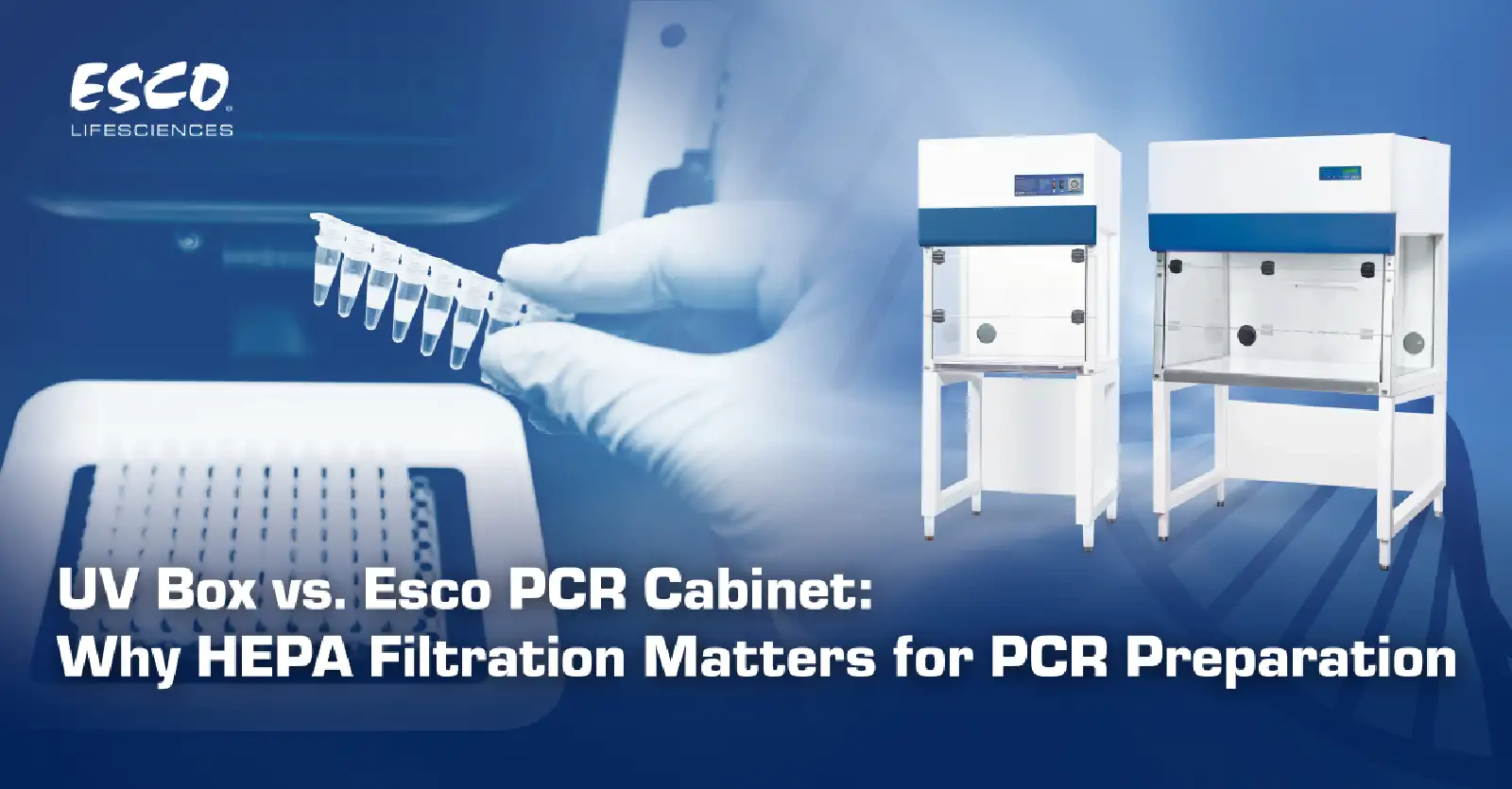
Polymerase chain reaction (PCR) amplifies millions of copies of DNA from a single-copy or low-copy-number template. While this makes PCR a powerful technique, it also makes the process highly sensitive to contamination, which can lead to false-positive or false-negative results. That is why pre-PCR preparation, such as aliquoting reagents, preparing master mix, and adding templates, requires deliberate workflow separation and controlled handling practices.
Is UV Alone Enough for PCR Preparation?
This raises an important question: Is UV alone enough to control contamination during PCR preparation?
A conventional UV box (also called a dead-air or still-air box) is an enclosed workspace equipped with a UV lamp. UV light helps reduce nucleic acid contamination by damaging DNA and making it unsuitable for amplification. However, UV decontamination does not provide active protection during pipetting. It does not continuously filter airborne particles or maintain a controlled clean-air environment while samples are being prepared.
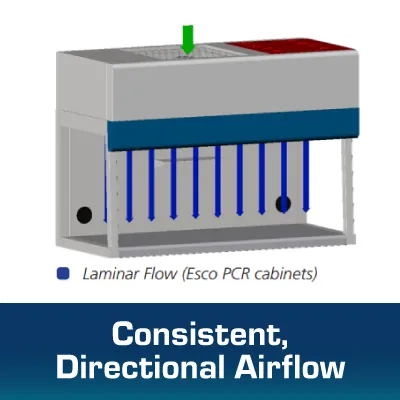
This is where a HEPA-filtered PCR cabinet offers an additional layer of protection. Esco PCR cabinets combine HEPA-filtered vertical laminar airflow, a dedicated clean workspace and a built-in UV lamp to help control contamination risks during preparation.
UV Box vs. Esco HEPA-Filtered PCR Cabinet at a Glance
| Feature | UV box (dead-air) | Esco HEPA-filtered PCR cabinet |
|---|---|---|
| Air filtration | No filtration | HEPA-filtered laminar airflow, typical efficiency >99.99% at 0.3 microns |
| Airflow | Still air, no active airflow | Controlled vertical laminar airflow at 0.30 m/s (60 fpm) |
| Airborne particle control | Does not actively filter airborne particles | Helps reduce airborne particulate contamination in the work zone, with ISO Class 3 air cleanliness |
| UV decontamination | Available | Available: 253.7 nm UV lamp |
| During preparation | Relies mainly on the enclosure and laboratory practices | Provides continuous HEPA-filtered airflow while the blower is operating |
Why HEPA Filtration Matters for PCR
During PCR preparation, tubes and reagent containers are frequently opened, exposing their contents to the surrounding environment. Airborne particles and aerosols can introduce unwanted contaminants into sensitive reactions.
HEPA-filtered airflow adds an important layer of particulate control to the preparation process:
Introducing Esco PCR Cabinet Solutions
Streamline® PCR Cabinet
Compact and Straightforward Operations
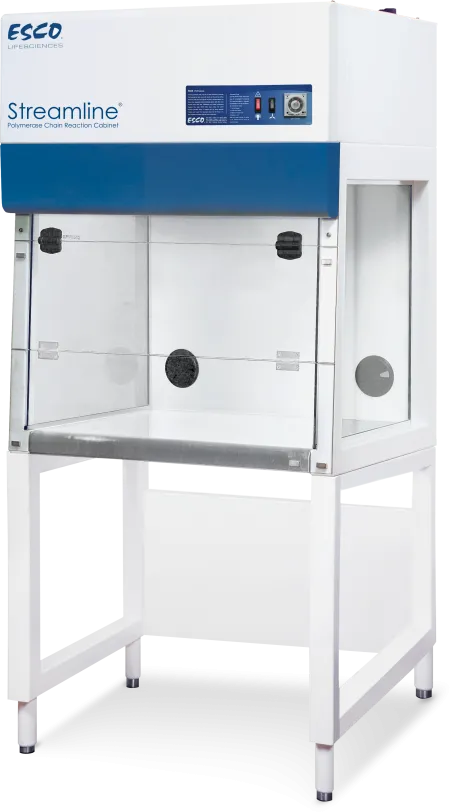
- Simple, durable rocker switches for blower, light, and UV
- Adjustable UV decontamination cycles via analog timer
- 15 W UV lamp
- Available in the 0.6 m (2 ft) SCR-2 model
Airstream® PCR Cabinet
Advanced Controls and Larger Workspace
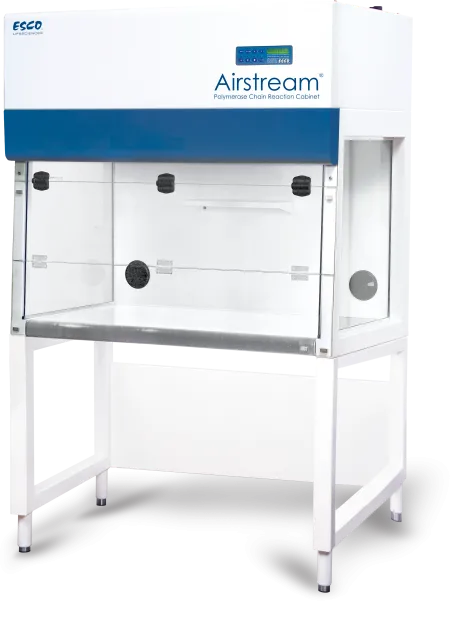
- Equipped with a soft-touch Sentinel™ Silver display for easy monitoring of UV lamp life, filter life, and UV run time
- UV timer function with countdown displayed on the LCD
- Automatic UV activation when the front shield is lowered
- Available in the 0.9 m (3 ft) PCR-3 model with a 15 W UV lamp and the 1.2 m (4 ft) PCR-4 model with a 30 W UV lamp
Shared Features Across Both Lines
Despite their differences in control systems and workspace size, both product lines share several design features:

UV safety protection
A built-in UV interlock prevents UV exposure during operation, while UV-filtering sash and side walls provide additional protection.

Energy-efficient operation
Designed to consume less energy than conventional laminar flow clean benches. An adjustable UV timer automatically switches off the UV lamp after the preset duration.

Longer filter life and lower maintenance costs
A polyurethane pre-filter helps extend the service life of the main HEPA filter.

Enhanced surface protection
ISOCIDE™ antimicrobial powder coating eliminates 99.9% of surface bacteria within 24 hours of exposure.

Ergonomic design
An angled front, rounded work surface edge, and glass side panels support comfortable everyday operation.

Reliable performance and safety
Compliance with international standards for cabinet performance, air quality, filtration, and electrical safety, with individual factory testing of every cabinet.
Find the Right PCR Cabinet for Your Lab
For setup and care tips, read our guide: From Installation to Maintenance: A Complete Guide to PCR Cabinets.
Share your requirements with us, and let's discuss the right solution for your laboratory.